


The Wheel of Balance: Are You Investing Your Energy in the Right Direction?
The Wheel of Life helps identify imbalance across work, health, and relationships. Learn how to restore balance and protect long-term performance.
Tomek Joseph
9/13/20243 min read
When One Area of Life Thrives — and the Rest Quietly Suffers
Many professionals appear successful on the surface.
Targets are met. Careers progress. Responsibilities expand.
Yet beneath that progress, energy declines, relationships strain, and motivation fades.
This imbalance rarely shows up as a single crisis. Instead, it builds slowly — until performance, wellbeing, or fulfilment begin to suffer.
The Wheel of Life is a simple but powerful tool that helps make these imbalances visible before they turn into burnout or disengagement.
What Is the Wheel of Life?
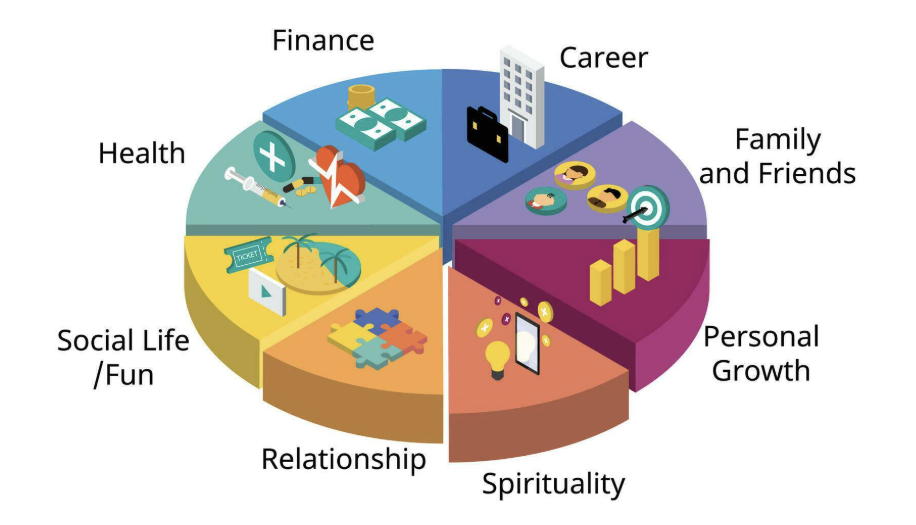
The Wheel of Life is a reflective framework used in coaching and development to assess how balanced — or unbalanced — different areas of life feel at a given moment.
It typically includes key domains such as:
Career & Work
Health & Energy
Relationships (family, friends, partner)
Personal Growth & Learning
Fun, Rest & Recreation
Meaning or Purpose
Each area is rated on a scale from 1 to 10 based on current satisfaction.
The scores are then connected to form a “wheel”.
A smooth, rounded wheel suggests balance.
A distorted wheel signals where energy is leaking.
For most people, the wheel is uneven — and that’s not a failure. It’s information.
Why Balance Matters More Than We Admit
Think of driving a car with one flat tyre.
You can still move forward — but the ride is uncomfortable, inefficient, and eventually damaging.
Life and work operate the same way.
When one area is consistently neglected — health, relationships, recovery, or personal growth — it quietly affects:
focus and decision-making
emotional regulation
resilience under pressure
long-term performance
Balance is not about perfection.
It is about preventing long-term strain caused by short-term focus.
When Success Masks Imbalance
I once worked with a client who was performing exceptionally well at work.
Sales targets were exceeded. Financially, everything looked strong.
Yet he was exhausted, disengaged at home, and increasingly irritable. His relationship with his wife and children was suffering. Burnout followed.
When we mapped his Wheel of Life, the pattern was clear:
Career: 9
Financial security: 9
Family: 3
Fun & recovery: 3
Health: 4 (despite initially rating it higher)
The imbalance wasn’t caused by lack of discipline — it was caused by over-investment in one area at the expense of others.
By deliberately easing pressure at work and redirecting energy toward family time, recovery, and enjoyment, his energy improved within weeks — and interestingly, his performance stabilised rather than declined.
Balance restored capacity. It didn’t reduce ambition.
How to Use the Wheel of Life Practically
Step 1: Assess Honestly
List your key life areas and rate each from 1 (very dissatisfied) to 10 (fully satisfied).
Avoid comparing yourself to others — this is about your experience.
Step 2: Visualise the Wheel
Connect the scores to form a wheel.
Notice where the biggest gaps are — those usually require attention first.
Step 3: Focus on One Adjustment
Choose one low-scoring area and define a small, realistic action.
Examples:
Health → 10 minutes of daily movement
Relationships → one intentional weekly connection
Fun → a planned activity that isn’t “productive”
The goal is not transformation overnight.
It is restoring enough balance to reduce friction and reclaim energy.
Why Small Adjustments Create Big Shifts
Balance improves through incremental changes, not dramatic overhauls.
Small actions:
restore a sense of control
reduce background stress
improve emotional availability
create positive spillover across other areas
As balance improves, energy increases — and when energy increases, everything else becomes easier.
Balance Is Dynamic, Not Static
Life moves in seasons.
There will be times when work demands more focus. Other times when health, family, or recovery must take priority.
The Wheel of Life is not about keeping everything equal —
it is about ensuring nothing essential is ignored for too long.
Regular check-ins help prevent imbalance from becoming normal.
A Final Reflection
Balance is not a luxury.
It is a prerequisite for sustainable performance, engagement, and wellbeing.
The Wheel of Life doesn’t tell you what to change —
it shows you where your energy is going, and where it may need re-direction.
That awareness alone is often enough to start meaningful change.