


Why Engagement Rises — or Falls — With Management
This article explores how managers shape engagement, stress, and ownership in the workplace — with insights relevant to Mauritius.
Tomek Joseph
2/11/20263 min read
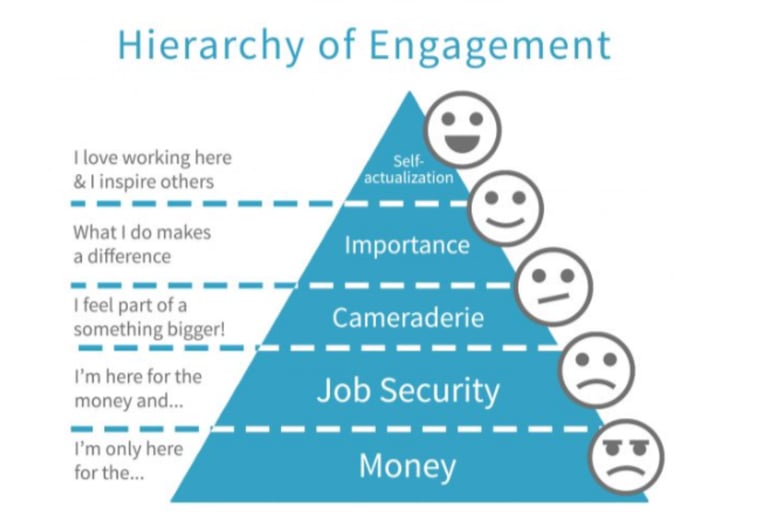
Employee engagement is discussed constantly. Surveys are run. Scores are tracked. Action plans are launched.
Yet when engagement declines, explanations tend to remain vague — workload, motivation, generational shifts, or “the current climate”.
What is far less clearly examined is where engagement is actually created.
Not at the organisational level. Not through HR initiatives. But through day-to-day management practices.
For most employees, leadership is not experienced through vision statements or town halls. It is experienced through their manager — the person who sets priorities, gives feedback, interprets pressure, and decides what receives attention and what does not.
This article focuses on that layer.
1.Engagement is not a mindset. It is a response to management
Engagement is often treated as an employee attitude — something people either bring with them or don’t.
In practice, engagement is far more often a response to the environment managers create.
People tend to engage when:
expectations are clear and consistent
decisions are explained, not just announced
effort is noticed and acknowledged
pressure is discussed rather than silently passed down
speaking up does not feel risky
These are not abstract leadership qualities. They are observable management behaviours.
When these conditions exist, engagement tends to rise quietly. When they don’t, engagement erodes just as quietly — often without visible conflict.
2.How management behaviour quietly shapes engagement
As pressure increases inside organisations, a recurring pattern appears.
Managers are expected to deliver more, faster, often with limited context and limited authority. Over time, this pressure subtly reshapes how work is managed.
You begin to see:
instructions replacing explanations
compliance replacing ownership
decisions becoming increasingly centralised
communication flowing downward, but not upward
In most cases, none of this is intentional.
Managers are often doing their best under sustained pressure. But the effect on teams is consistent: initiative becomes risky, and engagement narrows to “doing what is required”.
People do not disengage dramatically. They disengage carefully.
3.Transparency connects effort to opportunity
In modern work environments, engagement is closely tied to clarity.
People do not only ask, “What is expected of me?”
They also ask, often silently, “Does my effort lead somewhere?”
Transparency around decision-making — especially regarding growth, recognition, and advancement — plays a larger role in engagement than many organisations realise.
When expectations are clear, and when the criteria behind promotions or expanded responsibility are understood, effort feels connected to opportunity. Trust strengthens.
When decisions feel opaque or unexplained, even high-performing teams can begin to detach emotionally. The work continues. Performance may remain steady. But belief in the system narrows.
Over time, that narrowing shows up as reduced discretionary effort — long before it appears in survey data.
4.Engagement often declines before anyone notices
One of the most common challenges with engagement is timing. By the time engagement scores decline:
trust has already narrowed
communication has already become cautious
energy has already dropped
Early disengagement rarely looks like poor performance.
It shows up as:
fewer questions
less initiative
emotional distance
people doing only what is necessary
Because work still gets done, these signals are easy to overlook — until disengagement becomes measurable.
5.The Mauritius context: engagement erodes quietly
In smaller, close-knit work environments such as Mauritius, these patterns often take longer to surface.
-Hierarchy is respected.
-Stability is valued.
-Challenging decisions upward is approached cautiously.
As a result:
people adapt rather than escalate
stress is normalised as “part of the job”
disengagement is rarely named directly
warning signs remain subtle
By the time engagement becomes a visible concern, it has often been declining for some time.
This is why engagement surveys can feel confusing. The data arrives late — long after daily experience has already shifted.
6.Management sets the emotional conditions for engagement
Whether consciously or not, managers shape the emotional conditions in which work happens.
They influence:
how safe it feels to ask questions
how mistakes are handled
how pressure is communicated
how uncertainty is acknowledged
When managers are supported, clear, and able to hold pressure, teams often remain engaged even during demanding periods.
When managers themselves are overloaded or unsupported, engagement becomes fragile — not because people care less, but because the environment gives them less to work with.
7.Engagement is a signal, not a mystery
When engagement drops, it is rarely random.
It is a signal that:
clarity has weakened
pressure has accumulated
ownership has narrowed
communication has become cautious
Understanding engagement through the lens of management shifts the conversation.
It moves organisations away from asking:
“Why aren’t people engaged?”
And closer to asking:
“What are people responding to every day?”
That distinction matters — because it determines whether engagement is treated as a morale issue, or as a management system issue.
In the next article, we’ll look more closely at what happens when pressure continues to build — and how management practices can quietly turn pressure into stress, and sometimes into toxicity.
Related articles
This article builds on earlier observations around engagement, stress, and disengagement in Mauritian workplaces. You may also find the following relevant:
Stress as the Hidden Cost Behind Disengagement at Work
Explores how everyday pressure quietly erodes openness, trust, and motivation long before performance issues appear.When Work Becomes Quietly Toxic
Looks at how unmanaged stress often gets mislabelled as “toxic culture” — and why intent is rarely the real issue.Burnout Is Not a Sudden Event
Examines burnout as an end-stage signal of long-term overload rather than an individual failure.Why People Quit Long Before They Resign
Explains the slow disengagement patterns that precede attrition, especially in small, close-knit labour markets.
These pieces form part of an ongoing effort to openly examine how modern workplaces function — and dysfunction — under pressure.